A legend that endures
Did you know that one of the most famous stories of the ancient world may not have taken place in Greece — but on the Adriatic?
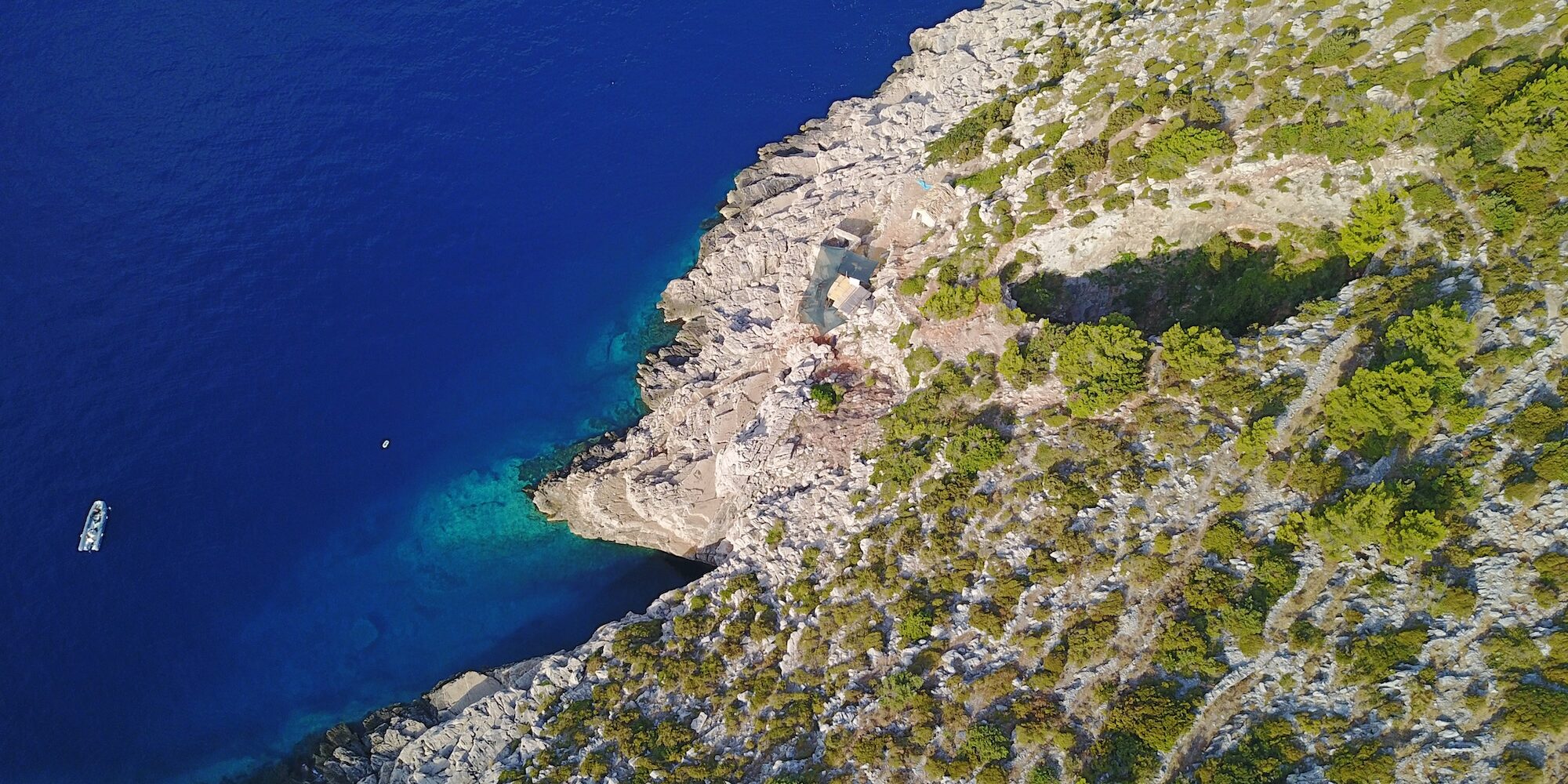
According to legend, it was here on the island of Mljet, off the Croatian coast, in a sea cave hidden beneath steep cliffs, that the nymph Calypso held Odysseus for seven years during his journey home. Today, this place is known as Odysseus’ Cave, one of the most mysterious locations along the Adriatic coast.
Odysseus — a traveler of the Mediterranean
In Homer’s Odyssey, Odysseus was not only a warrior, but an explorer and traveler driven by curiosity. His ten-year journey, legend says, brought him to Mljet — an island of peace, dense pine forests, and a silence increasingly rare in the Mediterranean today.
It is not difficult to imagine why someone would remain here for seven years.
Legend tells that Odysseus was shipwrecked on the rocks of the nearby islet of Ogiran and, saving himself by swimming ashore, found refuge in this very cave where Calypso kept him for seven years. Ancient sources refer to her island as Ogygia, and many see in the name Ogiran a lingering echo of that ancient story.
Science may not confirm the legend, yet the tranquility and isolation of this place easily explain why Mljet has long been associated with one of the Mediterranean’s most enduring myths.
Another fascinating detail further connects the cave to the wild nature of the sea. Odysseus’ Cave was once a natural refuge for the Mediterranean monk seal — one of the rarest marine mammals in the world. Known by its Latin name Monachus monachus, this elusive Adriatic inhabitant chose secluded sea caves like this as places of safety and shelter.
The symbol of protection and refuge at sea became the inspiration behind the name Monachus Yachts — yachts created for calm, safe, and confident navigation across the Mediterranean.

Monachus – the Mediterranean monk seal
Odysseus’ Cave — arriving from the sea
Approaching the cave from the open sea, the cliffs of Mljet gradually rise above the horizon while the entrance reveals itself only at the last moment — much as early sailors must have first discovered it centuries ago.
The yacht remains calmly on engines outside the entrance, while the final part of the journey is completed by swimming. This transition — from deck to water — transforms the arrival into a true moment of discovery, an experience impossible to replicate when approaching from land.
Swimming in crystal-clear water and the silence far from coastal crowds create a feeling of complete peace between rock and open sea. The sea has always been the natural way to reach Mljet — just as it was for ancient travelers.
Cruising with Monachus Yachts
Sailing toward Mljet is not merely arriving at a destination, but a journey through the very essence of the Mediterranean — waters navigated for centuries by explorers and ancient travelers like Odysseus himself.
Inspired by traditional lobster-boat lines and handcrafted in Croatia, Monachus yachts were born on the sea they know best — designed for safe and stable cruising across the Mediterranean, a sea that can be as breathtaking as it is unpredictable.
Quiet navigation, stability, and a natural sense of security allow for a slower, more relaxed rhythm of travel — perfectly suited to an island like Mljet. Anchoring in hidden coves and arriving before Odysseus’ Cave at just the right moment of the day transforms a visit into an experience that is not planned, but remembered.
Perhaps that is why the legend of Odysseus still lives on — because some places are not meant to be passed through, but to be stayed in.
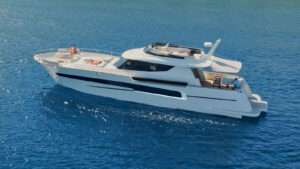
MY70F Fly
Toward the horizon
If Odysseus was the first great seafarer of the Mediterranean, today’s travelers can experience the same seas in a different way — slower, safer, and with a deeper appreciation for the journey itself.
Because a true voyage is never only about reaching a destination.
It begins the moment the bow turns toward the horizon.
Born to Sea You.
Monachus Yachts.
(The photograph of Odysseus Cave featured in this article was taken by photographer Miro Andrić, courtesy of the Tourist Board of the Island of Mljet, Croatia.)