



A well-kept yacht is never the result of occasional cleaning or reactive repair. It reflects a consistent, tailored approach in which every system, structural element, and onboard detail is maintained according to the vessel’s design, usage pattern, and owner expectations. Premium yacht ownership demands more than a checklist. It requires proper maintenance shaped around how the boat is actually used, where it cruises, and what level of performance and comfort is expected over time.
Why yacht maintenance should never be generic
No two yachts age in exactly the same way. A family cruiser used for short Mediterranean weekends faces different demands than a long-range vessel spending extended periods at sea. Climate, mooring conditions, engine hours, load patterns, and onboard equipment all affect the yacht’s overall condition.
A client-oriented maintenance strategy begins with understanding the owner’s real operating profile. That includes frequency of use, cruising range, storage method, seasonal downtime, and desired service standards. With that information, yacht maintenance becomes more efficient, more precise, and ultimately more protective of the yacht’s long-term value.
This custom approach is especially relevant for semi-custom yachts, where layout choices, onboard technology, finishes, and performance options may differ from one build to another. Maintenance planning must reflect those differences rather than rely on broad assumptions, particularly on semi-custom yachts.
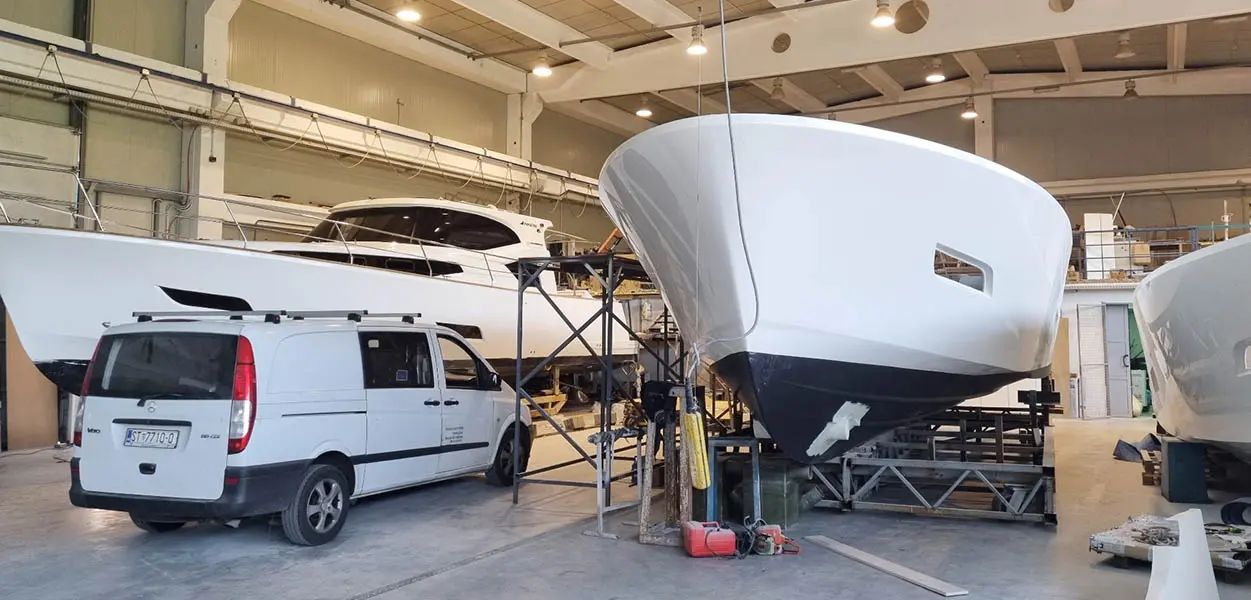
Hull care and structural protection
The hull is in constant contact with salt, sun, changing temperatures, and marine growth. Over time, even a beautifully built yacht can suffer cosmetic wear or more serious structural issues if inspections are delayed. Regular washing helps remove salt deposits, while scheduled polishing and protective coatings help preserve finish quality and reduce exposure-related deterioration.
Below the waterline, attention should focus on antifouling performance, moisture monitoring, and early signs of osmosis or impact-related damage. Minor surface problems are easier and less expensive to address before they develop into structural concerns. A disciplined inspection routine also helps identify stress points around fittings, transom areas, and high-load sections of the hull.
For owners cruising in warm coastal waters, this level of preventive care is particularly important because marine growth and salt exposure accelerate wear.
Engine reliability starts with routine service
The engine remains one of the most critical elements of yacht ownership. Reliability on the water depends on scheduled service, fluid management, and early detection of abnormal performance. Delaying maintenance may reduce efficiency, increase fuel consumption, and raise the risk of unexpected mechanical failure.
Core tasks usually include checking oil quality and level, monitoring cooling circuits, inspecting belts and hoses, replacing filters, and tracking running hours. Fuel quality is equally important. Contaminated fuel can affect combustion, reduce engine response, and create long-term system issues that are costly to correct.
Engine rooms should also be kept clean and dry. Excess moisture, vibration, and unnoticed leaks can quickly compromise surrounding components. A maintenance plan designed around actual engine load, seasonal usage, and cruising habits helps extend engine life while supporting dependable performance, especially as part of professional yacht services.
Water systems and onboard comfort
Guest comfort depends heavily on the reliability of every water-related function onboard. Freshwater tanks, pumps, heaters, toilets, grey water handling, and drainage systems all require regular checks to remain hygienic and functional. Even a small leak can lead to hidden damage, unpleasant odors, or material degradation inside cabinetry and technical spaces.
A tailored schedule should include flushing lines, checking pump pressure, inspecting hose connections, and confirming that seals remain intact. On yachts used intermittently, water systems need extra attention after periods of inactivity. Stagnation, mineral buildup, and seal shrinkage can all affect performance once the yacht returns to service.
Electrical system management and battery health
A modern yacht relies on an integrated electrical system for navigation, lighting, climate control, entertainment, refrigeration, and safety equipment. Because so many onboard functions depend on uninterrupted power, regular inspection of the electrical system is essential.
This includes checking wiring integrity, circuit protection, charging efficiency, connections, and control panels. Salt-laden air increases the risk of corrosion, especially in terminals, connectors, and exposed fittings. Left untreated, corrosion can weaken performance and create intermittent faults that are difficult to diagnose.
The battery bank also deserves close attention. Voltage stability, charging cycles, storage conditions, and seasonal inactivity all affect battery life. In a client-oriented maintenance plan, battery care is not treated as a minor detail but as a central part of overall vessel readiness.
Safety is a maintenance priority, not an accessory
True safety on a yacht does not come only from equipment carried onboard. It comes from the ongoing readiness of every operational and emergency system. Bilge pumps, fire suppression, alarms, navigation lights, steering response, anchoring equipment, and communication devices should all be tested at regular intervals.
A yacht in excellent cosmetic condition may still present serious risks if critical safety systems are neglected. That is why maintenance planning should always include operational testing, not just visual review. Owners benefit from clear service records, predictable schedules, and professional reporting that show exactly what has been checked, adjusted, or replaced.
The value of owner-focused maintenance planning
The most effective owner experience comes from a maintenance process that is transparent, realistic, and adapted to the specific yacht. Rather than applying the same routine to every boat, a custom plan considers build details, installed equipment, cruising style, and desired service level.
This approach supports better budgeting, fewer unexpected repairs, and stronger resale appeal. It also helps preserve the character of a yacht that was selected or built with care in the first place. For premium brands and semi-custom builders, that alignment between design and aftercare matters just as much as craftsmanship itself, as reflected in Monachus Yachts.
A refined yacht deserves maintenance that matches its engineering, aesthetics, and intended use. When the boat, its systems, and the owner’s expectations are treated as part of the same picture, maintenance becomes more than routine service. It becomes a practical way to protect performance, comfort, and confidence every time the vessel leaves the dock.
Need Professional Yacht Maintenance Advice?
Whether you own a Monachus yacht or another premium vessel, our team can help you develop a maintenance strategy tailored to your cruising habits, technical requirements, and ownership goals.

2 Comments